BH FARM products

BIO BH FARM water treatment probiotic

A probiotic for managing water quality in fish ponds

Helps deal with murky pond water, foul water and ammonia build up. Use it in both the grow out pond and the filter tanks.

  • Conditions the water
  • Helps digest waste
  • Supports water treatment
  • Keeps the water in balance

Order through LINE or the BH FARM store on Shopee

For Bio Control System
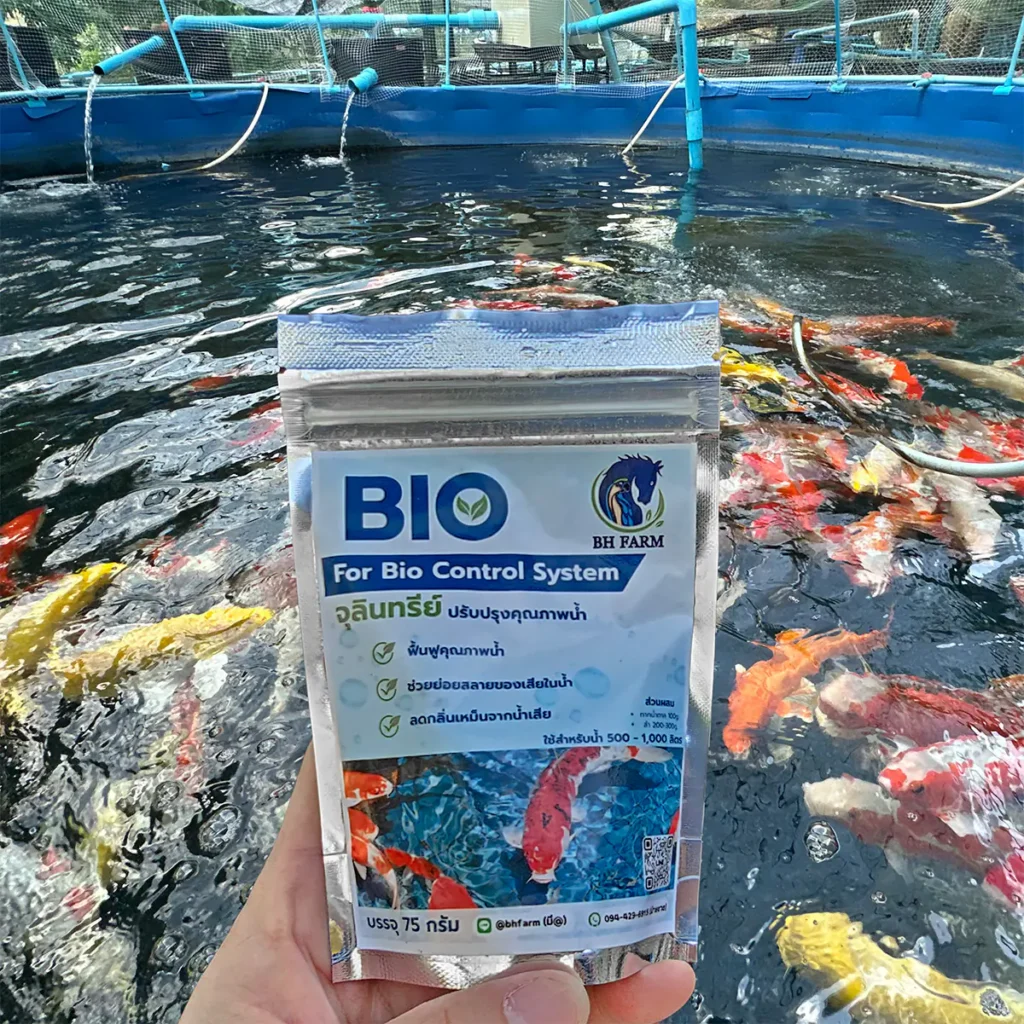
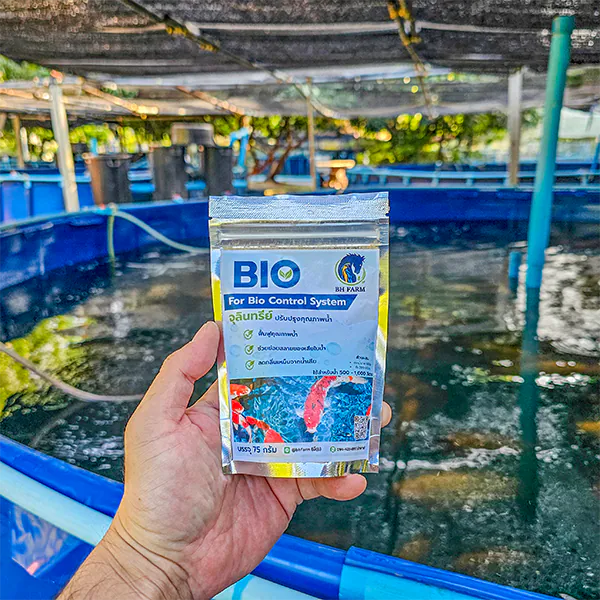
A 75 g sachet of BIO BH FARM probiotic held over a canvas koi pond
Pack size
75g per sachet
Use in
Grow out pondsand filter tanks
Type
Probioticnot a drug, not a chemical
A 75 g BIO BH FARM sachet held over a canvas pond on the farm
BIO BH FARM, 75 g sachet

About the product

Meet BIO BH FARM

BIO BH FARM is BH FARM's water treatment probiotic. It helps break down leftover feed, animal waste and organic residue in grow out ponds and filter tanks, so the water system stays stable.

In a fish pond, and in a closed system above all, waste does not go away on its own. Without microbes to digest it, the water slowly deteriorates in ways you cannot see.

Stated on the label

  • Restores water quality
  • Helps break down waste in the water
  • Reduces odour from foul water

From the manufacturer

  • Not a drug and not a chemical
  • Not harmful to aquatic animals
  • Works with biological filtration

Benefits

How do probiotics help look after water quality?

Microbes digest the waste a pond produces every day, so the water system can keep working in balance.

01

Digests leftover feed and fish waste

Breaks down uneaten feed and droppings left in the pond

02

Handles organic residue

Digests organic matter that builds up in ponds and filter tanks

03

Reduces foul water and odour

Helps reduce foul water, muddy smells and slime in the pond

04

Supports a balanced water system

Keeps the water steadier, with fewer swings

05

Less waste build up

Reduces the build up of waste and ammonia in the water

06

A better environment for fish

When the water is stable, fish are under less stress

Results depend on the pond, the feeding rate and how the whole water system is managed. Probiotics are long term care for the system, not an emergency fix.

Common problems

Water quality problems every fish farm meets

These problems usually start with waste collecting in the pond, then slowly affect the water before anyone notices.
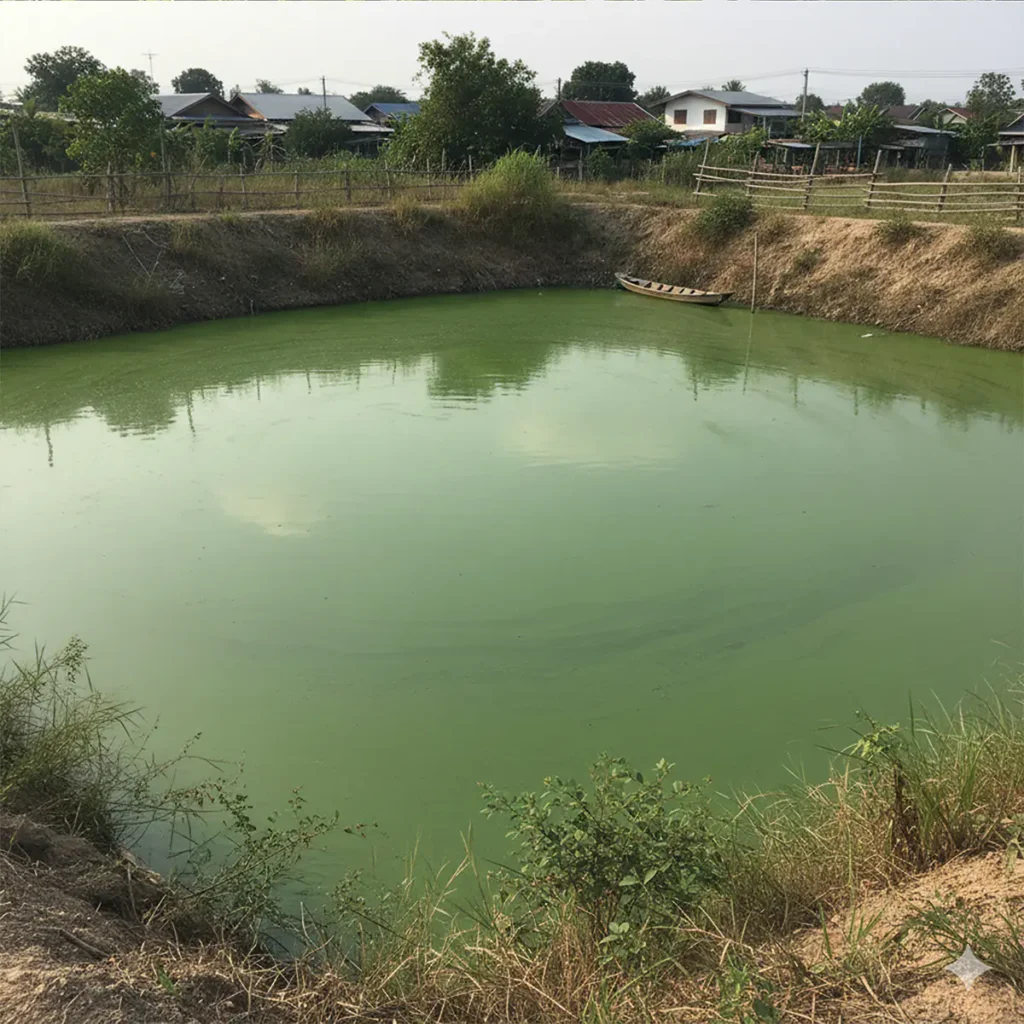
An earthen pond with cloudy green water, an example of problem waterWater with waste building up
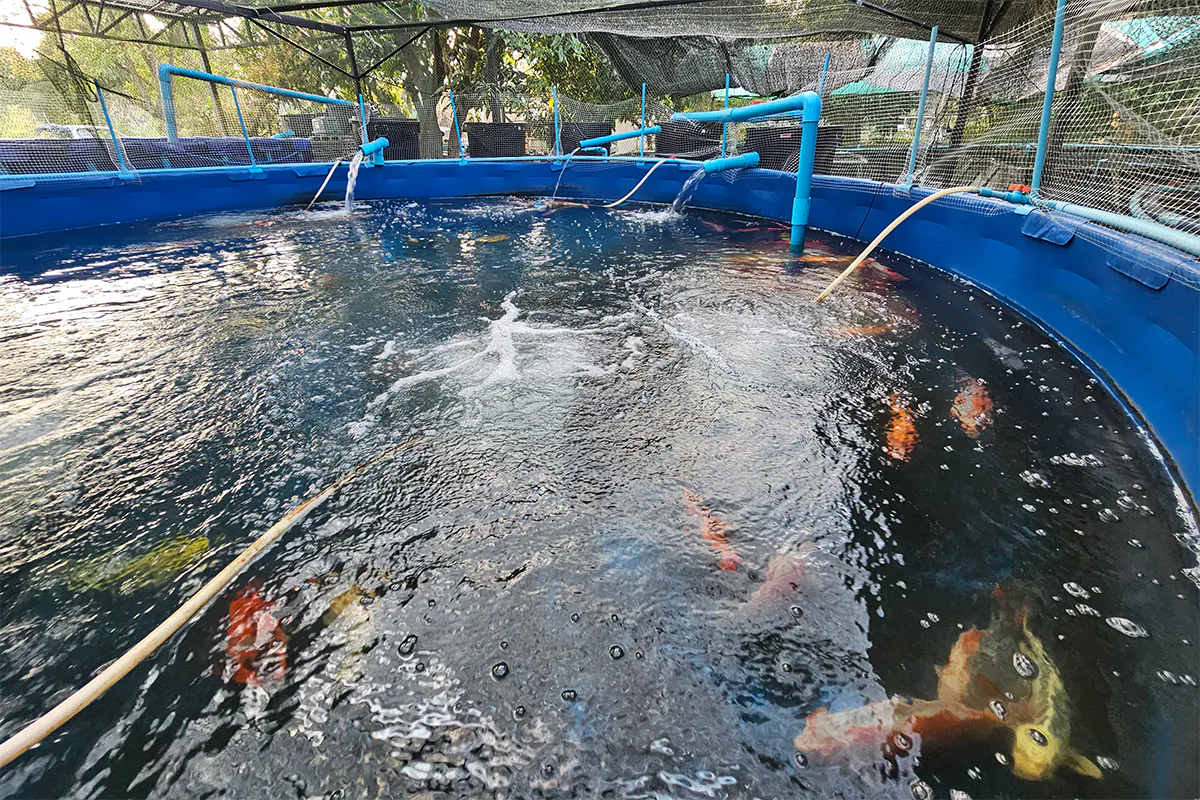
Clear water in a fish pond with water circulationWater that is being managed
Illustrative photos of two different ponds. Not a before and after of this product, and not a test result.
  • Murky water and floating sedimentSo much suspended matter the fish look lost in fog
  • Muddy or rotten smellYou can tell the moment you open the pond
  • Leftover feed and waste build upUneaten feed and droppings collect in the water
  • Slick surface and lingering foamA film on the surface hampers oxygen exchange
  • Filters clog quicklyFlow drops and filtration loses its effect
  • Stressed, slow feeding fishFish gasp at the surface, feed slowly and fall behind

How it works

How do probiotics deal with waste in a fish pond?

A simplified view of the idea, not a chemical reaction pathway.

  1. Step 1

    Feed and waste collect

    Uneaten feed and fish droppings settle in the pond every day

  2. Step 2

    Waste builds in the water

    Organic matter collects, ammonia rises, the water turns murky and starts to smell

  3. Step 3

    Microbes break it down

    Microbes digest organic matter biologically, which needs oxygen and moving water

  4. Step 4

    The water rebalances

    Helps the water settle, with less odour and less stress on the fish

Use probiotics before the system fails, not after it has. Looking after the water early costs far less than fixing it later.

How to use

How to use BIO BH FARM

Simple to use: no fermentation needed, pour it straight into the pond. The recommended rate is 7.5 g per tonne of water, repeated every 1 to 2 weeks.

Application

  1. Add it where the water moves

    At the inlet, in flowing water or where the system creates a current. Spread it across the grow out pond and the filter tanks, and avoid still corners.

  2. Run aeration while dosing

    The microbes need oxygen to start working, so add them while the water system is running.

  3. Pick the right time of day

    Early morning in soft light, or evening into night. Avoid strong midday sun and high temperatures.

  4. Use it consistently

    Probiotics are long term care for the system. Continuous use gives the best results.

Dosage and frequency

7.5g per tonne of water

One 75 g sachet treats 10 tonnes of water

Preparation
No fermentation needed. The microbes start working as soon as they touch the water.
Frequency
Repeat every 1 to 2 weeks, or straight away if the water starts to smell or waste floats.
Safety
Not harmful to aquatic animals. Not a drug and not a chemical.

The right amount depends on stocking density. If you are unsure, ask our team.

Ask about dosage for your pond

When to use it or add more

  • Before stocking fingerlings
  • After a large water change
  • After heavy rain
  • When fish grow fast and waste rises
  • When the water starts to smell or waste floats

Applications

Where does it fit?

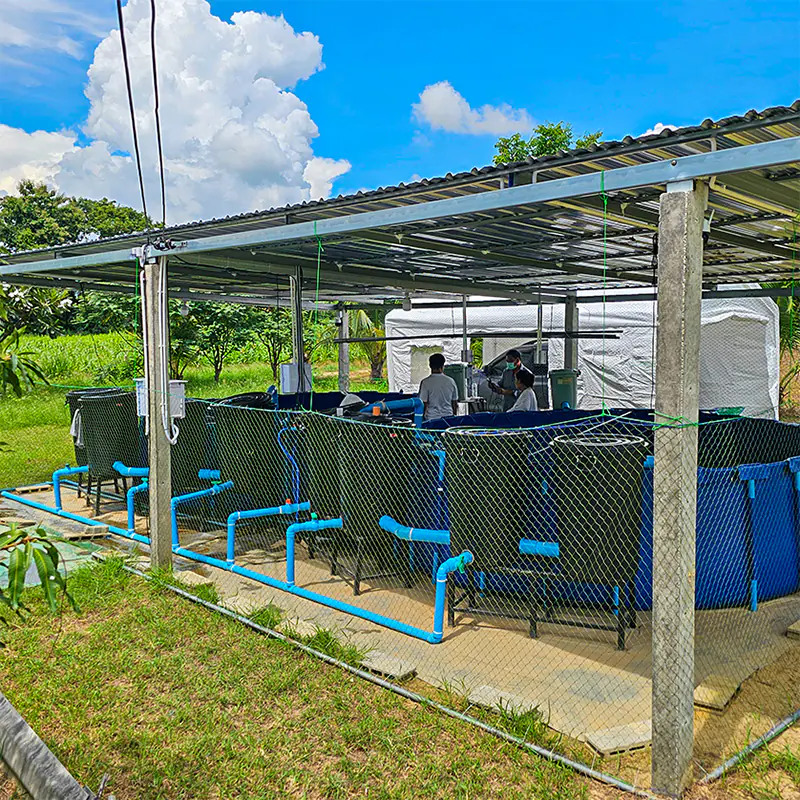
It works in both grow out ponds and filter tanks, and is made to be used with canvas fish ponds and closed fish farm systems.
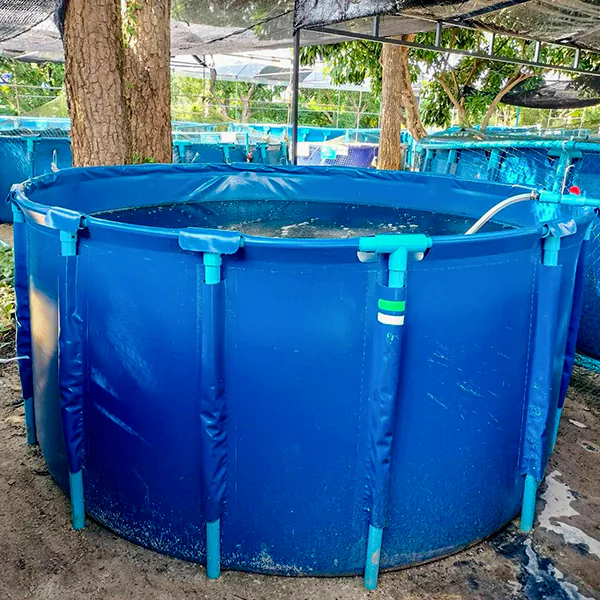
A circular BH FARM canvas pond with its support frame

Canvas fish ponds

Spread across the pond where the water circulates. Works with BH FARM's circular canvas ponds.

See BH FARM canvas ponds
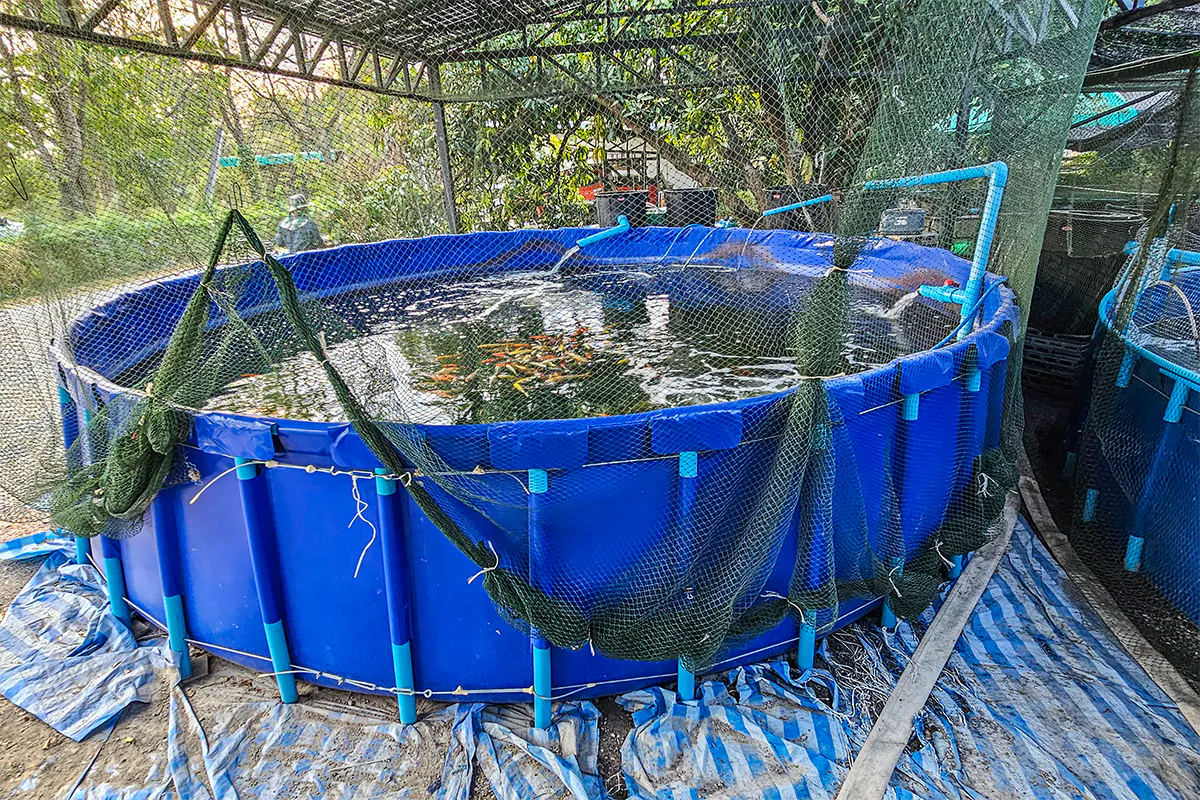
A canvas pond working with a filter set in a BH FARM closed fish farm system

Closed system fish farms

In a closed system waste does not leave on its own. Probiotics help digest the waste circulating in the water.

See the closed farm system
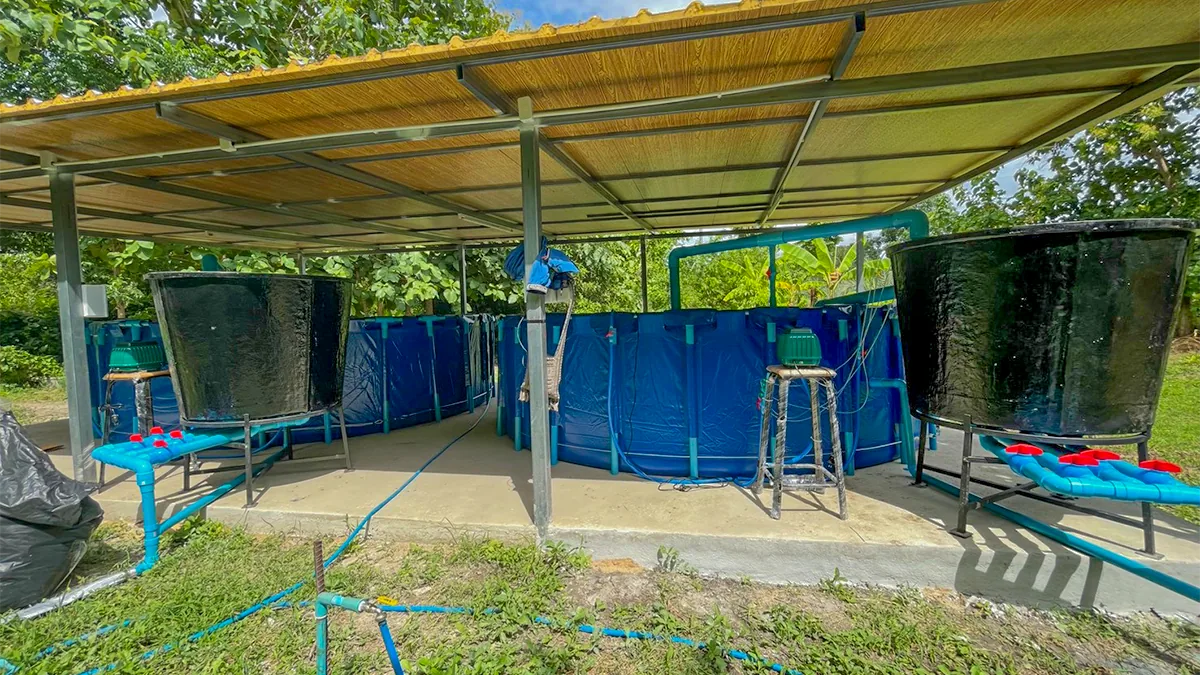
A bank of filter tanks installed beside a canvas pond

Filter tanks and biofiltration

Pour directly into the filter tanks. The microbes settle on the filter media and help biological filtration work fully.
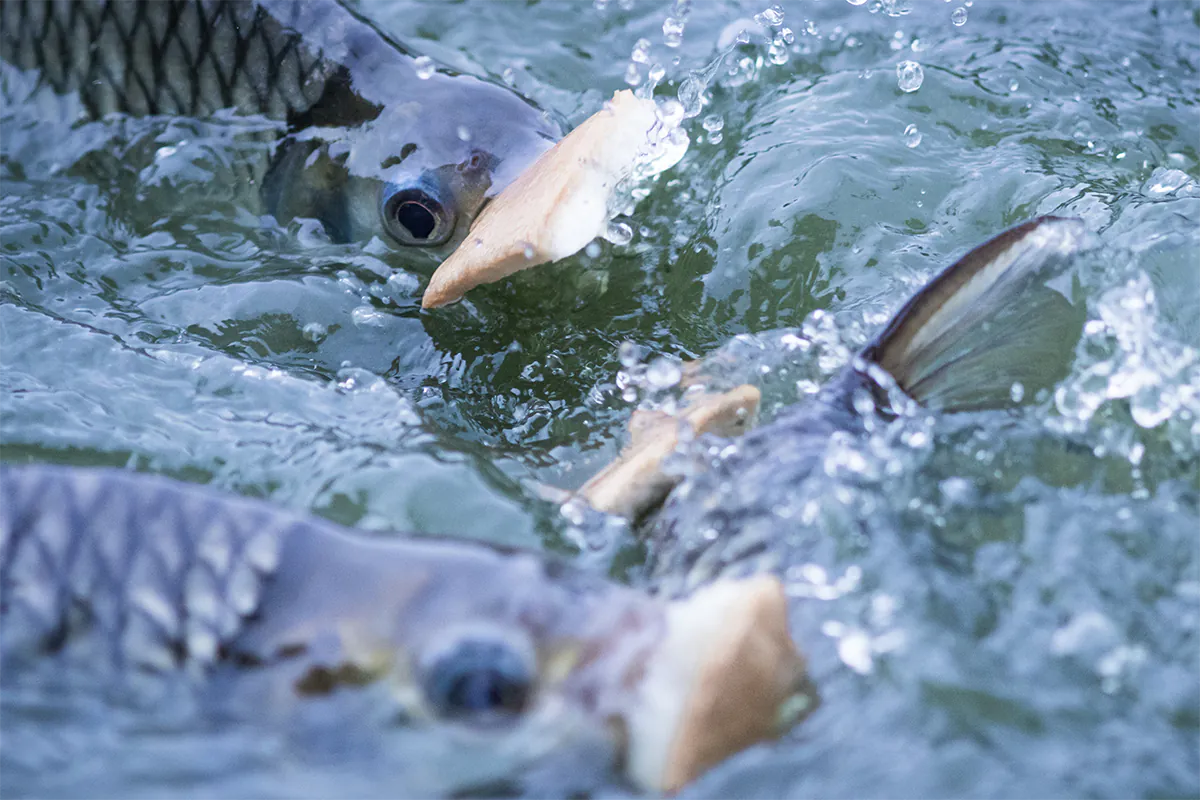
Fish feeding at the surface of a BH FARM grow out pond

Ponds with feed and fish waste build up

Ponds fed heavily, or ponds starting to smell or show floating waste.

Water quality basics

Understand foul water before it hurts your farm

  1. Cause

    What makes pond water murky?

    Usually waste build up: leftover feed, fish droppings and rising ammonia. Left unmanaged, the system falls out of balance, the water clouds and smells, and the fish become stressed.

  2. Warning signs

    Signs your pond water is going bad

    Before fish start dying, the water usually gives warnings, such as

    • Water turning cloudy or changing colour
    • A foul smell
    • Fish floating or breathing fast
    • Fish eating less
  3. Impact

    What happens if the waste is not managed?

    Waste and ammonia keep rising. Fish become stressed, grow slowly and are more likely to fall ill or die.

  4. Prevention

    Why does ongoing water care matter?

    Fixing a system after it fails is usually expensive, such as large water changes or losing fish. That is why caring for the water from the start matters so much.

If you want tighter control of the water, a closed recirculating system (RAS) helps reduce the risk of foul water.

See the closed farm system

FAQ

Frequently asked questions about BIO BH FARM

Every answer is based on BH FARM's own published material. For the right amount and schedule for your pond, our team is happy to advise.

Ask a question
What are probiotics, and why does a fish pond need them?
They help digest waste from leftover feed and fish droppings, reduce ammonia build up and keep the water stable. A fish pond is a closed system: the waste it produces does not disappear. Without help, the water slowly goes bad in ways you cannot see.
How often should I add probiotics?
Not every day. Probiotics are long term care, not an emergency fix. Add them more often while a pond is new or unsettled, then periodically once it stabilises, and top up after a large water change, after heavy rain or when fast growing fish produce more waste. As a routine, repeat every 1 to 2 weeks.
Where in the pond should I add them?
Where the water moves: at the inlet, in flowing water or where the system creates a current. The microbes need to spread through the pond and need oxygen to start working. Pouring them into still water usually means they cannot work fully.
What time of day is best?
Early morning in soft light, or evening into night. Avoid strong sun, as high temperatures can stop the microbes working fully. Add them while the water system is running, for example with a paddle wheel on or water circulating.
How long before I see a change?
Not overnight. Typically the microbes establish in the first 1 to 3 days, and between 3 and 7 days the water starts to settle, odour drops and fish show less stress. A pond with long standing problems may take longer. Probiotics restore the system; they do not make the water good instantly.
Can fish eat the probiotics?
Yes, and it does them no harm. Pond probiotics are not toxic and do not hurt fish. They are not fish feed, though. Their job is water quality, so there is no need to mix them into feed.
Can I add them at feeding time?
Yes. In practice the microbes then deal better with waste from leftover feed and droppings. What matters is feeding the right amount, because overfeeding creates more waste than the system can handle.
Can they be used with a biological filter?
Yes. The microbes attach to the filter media and help biological filtration work more completely.
How should I deal with murky pond water?
Use a pond probiotic to help digest waste, reduce ammonia and bring the water back into balance, alongside feeding the right amount.
Why is ammonia in a fish pond dangerous?
Ammonia is a waste product that is toxic to fish. As it builds up, fish become stressed, grow slowly and may die.

Contact & orders

Start managing your farm's water quality systematically

Ask about BIO BH FARM and how to look after water quality on your fish farm.

Farm location
Suan Nok Farm Ma, 123/1 Moo 15, Lao Khwan, Lao Khwan District, Kanchanaburi 71210, Thailand
Follow us
TikTok
LINE QR code for adding BH FARM Asia as a contact

Scan to add us on LINE

@bhfarm (with the @)